What Element's 2026 Market Pulse signals for Australian fleets
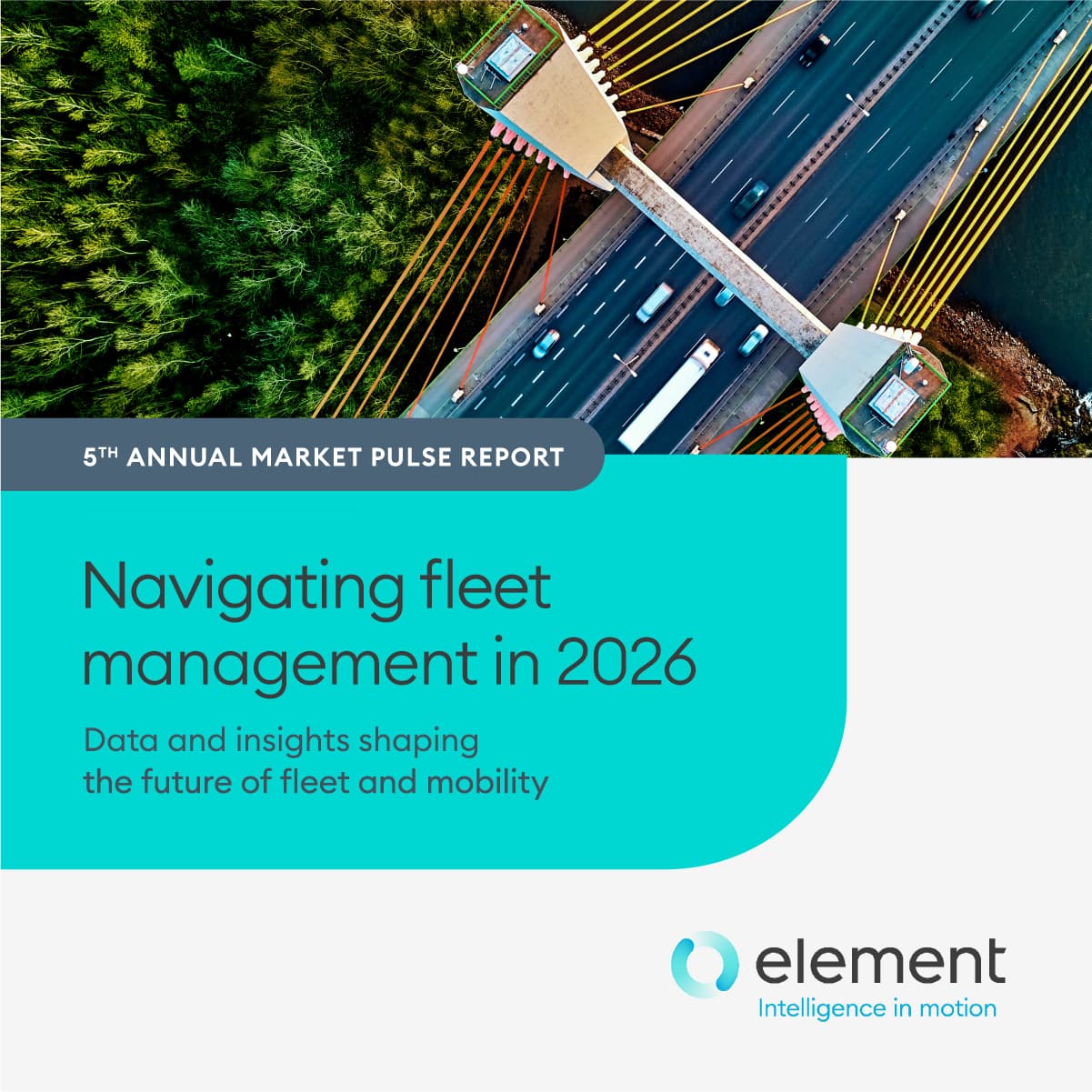
New fleet insights are emerging from Element’s 5th Annual Market Pulse Report, showing that fleet leaders are under pressure to achieve more from every vehicle, every investment and every decision.
Element Fleet Management's fifth annual Market Pulse Report provides a snapshot of how organisations across North America are responding to that challenge.
While the research doesn’t include Australian market data, the themes offer useful insight into the priorities shaping fleet management globally and raise important considerations for organisations here in Australia.
The key message is clear: Fleet transformation is continuing, but with greater discipline around where and how organisations invest.
Cohen McElroyMarketing and Communications Manager ANZ
05 May 20263 min read
Cost control is influencing fleet strategy
Cost savings emerged as the strongest priority in the 2026 research, with 78% of respondents identifying it as a key focus.
That doesn't necessarily mean cutting investment. Instead, fleet leaders are looking more closely at where spend delivers value.
For Australian organisations, this reinforces the importance of understanding total cost of ownership rather than focusing only on vehicle acquisition costs.
Maintenance, replacement timing, utilisation, fuel or charging costs, downtime and residual value can all influence long-term fleet performance.
Better visibility across these areas can help organisations identify opportunities to control costs without compromising operational requirements.
Extending vehicle life needs careful planning
The report also highlights a more cautious approach to fleet growth and replacement. Half of respondents expect to maintain their current fleet size, while economic pressures are encouraging some organisations to extend vehicle replacement cycles.
Keeping vehicles longer can reduce immediate capital requirements, but it can also introduce additional maintenance, downtime concerns and reliability costs.
This makes lifecycle analysis increasingly important.
Using fleet data to understand vehicle condition, maintenance history, utilisation and expected replacement costs can help organisations determine when extending a vehicle's life creates value and when replacement becomes the more efficient option.
AI and technology are being judged on outcomes
Interest in AI and digital tools continues to grow, with 53% of survey respondents exploring their use.
What stands out is where organisations are applying them. Driver safety and cost management are the leading use cases, showing that technology investment is being linked closely to practical business outcomes.
This aligns with the way we think about technology at Custom Fleet. Telematics, connected vehicle data and emerging AI capabilities are most valuable when they improve visibility, help identify risk and support better decisions.
The opportunity isn't simply to collect more data, it's about turning that information into action.
Safety remains closely connected to fleet performance
Driver safety continues to rank highly among fleet priorities.
The report shows organisations using a combination of formal driver training, telematics-based coaching, in-vehicle monitoring and emerging AI tools to manage risk.
For Australian fleet leaders, this highlights the value of taking a connected approach to driver safety.
Training can address behaviour and capability, while telematics identifies patterns of risk and accident management data provides insight into incidents and their causes.
Together, these tools create a clearer picture of where intervention can have the greatest impact.
Decarbonisation is becoming more pragmatic
The research also points to a measured approach to fleet electrification.
Rather than making immediate, fleet-wide changes, organisations are increasingly considering phased transitions that balance emissions goals with cost, infrastructure and operational requirements.
Hybrid and alternative fuel vehicles are also being considered as transitional options.
For Australian fleets, the takeaway is that decarbonisation doesn't need to follow a single pathway.
Understanding vehicle usage, operational requirements, charging availability and total cost of ownership can help identify where EVs are suitable today and where other solutions may provide a practical step towards lower emissions.
Better decisions are becoming the competitive advantage
Perhaps the strongest message from the 2026 Market Pulse is that fleet management is becoming increasingly evidence-led.
Cost pressures haven't stopped investment in innovation, safety or sustainability. They have increased the expectation that those investments deliver measurable outcomes.
For Australian organisations, that creates an opportunity to use fleet data, technology and Strategic Advisory Services to understand where change will have the greatest impact.
The organisations best positioned for the future may not be those making the biggest changes. They'll be the ones making the right changes based on clear evidence and operational priorities.
Recent articles
Explore the report
Read Element Fleet Management's full 2026 Market Pulse Report to explore the trends influencing fleet and mobility strategies globally.
Get in touch
Talk to us about how we can help turn your fleet data into better business decisions.