The future of mobility won't be defined by vehicles, instead it'll be defined by the decisions made around them.
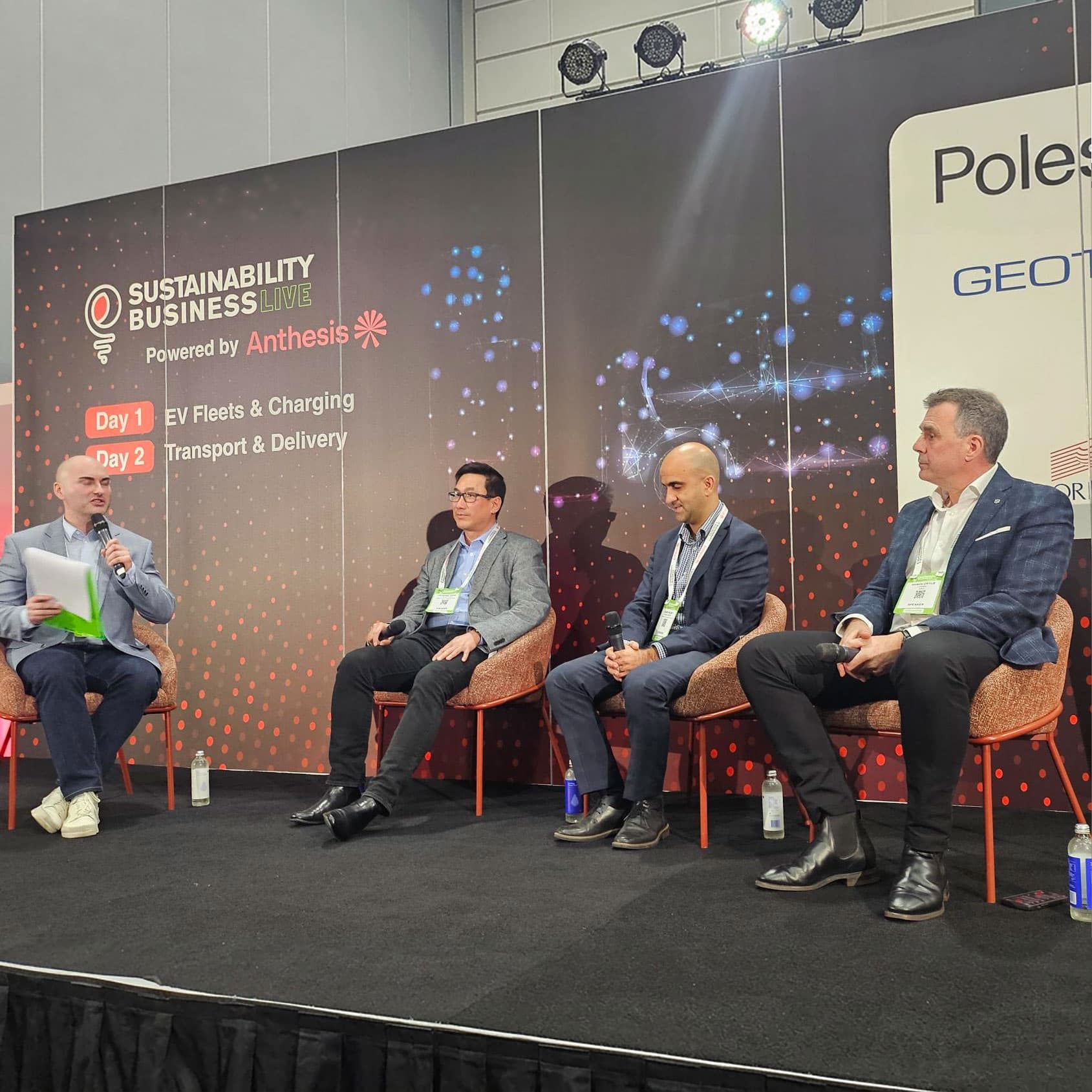
Facilitated by Shaun Cameron, our panel discussion, Beyond fleet: building the intelligent mobility ecosystem, brought together perspectives from fleet, energy and mobility technology, featuring Leonard Tham (Custom Fleet), David Helmy (Origin Energy) and Shaun Drylie (Carbn Group).
Cohen McElroyMarketing and Communications Manager ANZ
15 Jun 20263 min read
Together, the panel explored how changing customer expectations, emerging technologies and sustainability priorities are reshaping the role mobility plays in driving performance.
Leaders are increasingly looking beyond traditional fleet management and asking a different question: How can mobility support better business outcomes?
The changing role of mobility
For many organisations, mobility has traditionally been viewed as an operational function focused on managing vehicles, controlling costs and maintaining compliance.
That perspective is changing.
Today's mobility landscape is being shaped by rapidly evolving technology, increasing sustainability expectations and greater access to data and insights. As a result, mobility is increasingly being viewed as a strategic capability that can influence operational performance, employee experience, sustainability outcomes and long-term value creation.
The leaders driving this transition are no longer focused solely on the assets they manage. They are focused on the outcomes they enable.
Perhaps the most significant shift is that mobility is no longer being defined by a single technology, vehicle type or solution.
Instead, it is being shaped by connected ecosystems.
By bringing together mobility, technology, energy, sustainability and data, it becomes possible to create more integrated experiences, make better decisions and unlock greater value.
The real opportunity lies in connecting capabilities that have traditionally operated in isolation.
Mobility, technology, sustainability and data are no longer separate conversations. Together, they have the potential to create better experiences, deeper insights and stronger outcomes.
Data is becoming the foundation of mobility decisions
One of the strongest themes to emerge from the session was the growing role of data.
In the past, many fleet and mobility teams relied on disconnected systems, fragmented reporting, and hindsight to guide mobility decisions.
Today, access to connected, real-time information is creating a very different opportunity.
Visibility across vehicle use, cost, carbon impact, and operational performance enables a shift from reactive management to proactive decision-making.
The question is no longer what happened in the past; it's what should happen next.
That shift creates opportunities to improve efficiency, optimise resources and deliver better outcomes.
The result is greater visibility, stronger operational performance, and closer alignment between mobility strategy and business objectives.
Sustainability is a business driver
Increasingly, sustainability is no longer being treated as a standalone initiative or simply a reporting requirement.
Instead, it is becoming embedded in broader business decision-making.
Whether through fleet electrification, improved asset efficiency, operational improvements, or resilience planning, leaders are recognising that sustainability and business performance are becoming increasingly connected.
Successful businesses are identifying practical opportunities, building momentum, and focusing on initiatives that deliver commercial value and a reduction in fleet emissions.
Sustainability is no longer a separate conversation; it is becoming part of how decisions are made.
The conversation continued beyond the stage
One of the most encouraging outcomes from the session was the level of engagement that followed between the presenters and the audience.
Conversations continued long after the panel concluded, with attendees sharing ideas, challenges and opportunities around the future of mobility.
Those discussions reinforced a simple but powerful message: the future of mobility is already taking shape.
It's connected, data-led and increasingly becoming a strategic driver of business performance.
For those willing to embrace new ways of thinking, it presents an opportunity to create better outcomes for people, businesses and the communities they serve.